
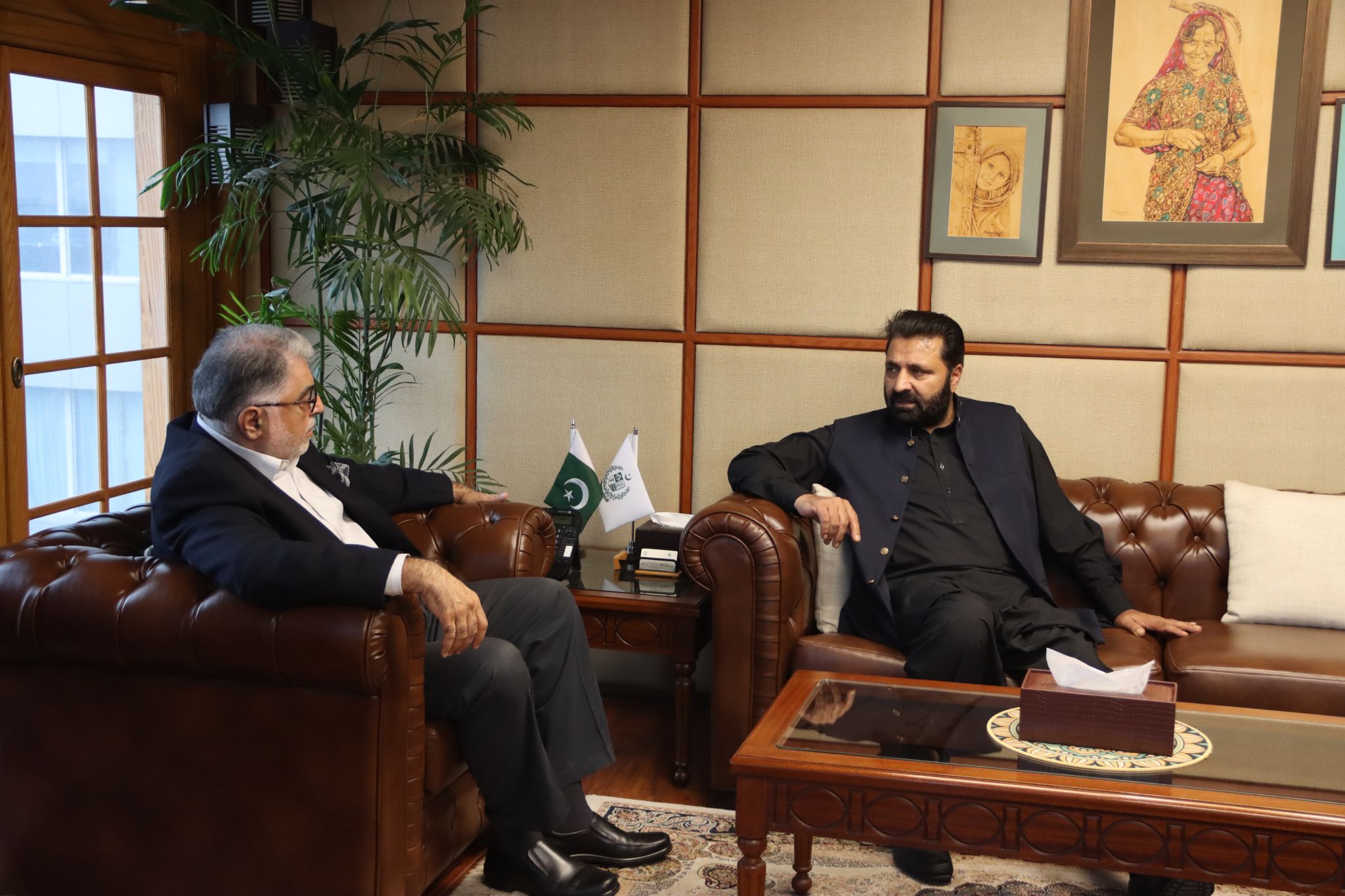
The Honorable Chief Minister of Gilgit-Baltistan Amjad Hussain, called on Chief Executive Officer of the National Disaster Risk Management Fund (NDRMF), Amir Khan Goraya, at NDRMF Headquarters to discuss climate change challenges, disaster risk reduction (DRR) priorities, and opportunities for enhanced collaboration to strengthen resilience in Gilgit-Baltistan.
During the meeting, the Chief Minister highlighted the growing impacts of climate change in the region, including glacier-related hazards, flash floods, landslides, and other climate-induced risks that continue to threaten communities, infrastructure, and livelihoods. He underscored the need for innovative and sustainable interventions to address these challenges and build long-term resilience.
NDRMF team briefed the Chief Minister on the Fund’s mandate and its ongoing efforts to promote climate resilience, disaster risk reduction, and innovative climate financing solutions across Pakistan. Information on NDRMF investments in Gilgit-Baltistan, as well as its future pipeline of planned interventions, was also shared, reaffirming the Fund’s continued commitment to supporting the region’s sustainable and climate resilient development.
Recognizing the importance of mobilizing international climate finance, NDRMF offered support through its Project Preparation Facility (PPF) to assist the Govt. of Gilgit-Baltistan in developing high-quality, bankable project proposals. The facility will help prepare technically robust and investment-ready projects capable of attracting financing from international climate funds and development partners.
While acknowledging region’s immense tourism potential, CEO NDRMF highlighted emerging environmental challenges associated with increasing tourist inflows, particularly those related to solid waste management, environmental degradation, and pressures on fragile mountain ecosystems. He stressed the need for proactive planning and integrated interventions to ensure that tourism contributes to economic growth without compromising the region’s natural environment and resilience.
The meeting concluded with a shared commitment to strengthen institutional collaboration and work jointly towards developing innovative, sustainable, and climate-resilient solutions for the people of Gilgit-Baltistan.